Home › Industrial Floors and Specialty Slabs
Superior Concrete Durham installs industrial concrete floors and specialty slabs for manufacturing, storage, and specialty facilities in Durham, NC. We work with engineers to deliver high load, superflat, and temperature controlled slabs that match your operations.
Superior Concrete Durham provides professional industrial concrete floor throughout Durham, NC, North Carolina and the surrounding area. Our licensed, insured crew delivers safe, clean, on-time work with a free estimate before anything begins. Call (984) 384-5856 or request your free quote.
Durham industrial concrete floors built for real production environments
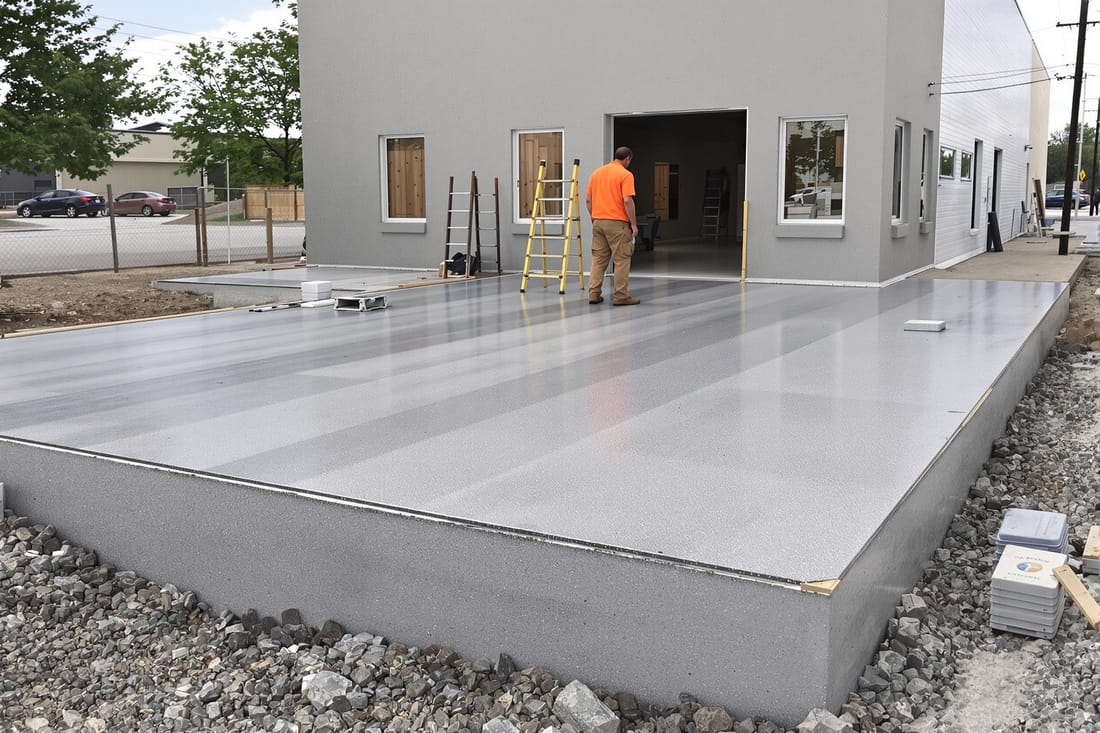
If you are planning a new facility or upgrading an older building in Durham, your industrial concrete floor is not the place to cut corners. At Superior Concrete Durham, we design and build floors and specialty slabs that stand up to forklifts, racks, washdowns, impact, and heavy machinery, not just light foot traffic.
Durham and the surrounding Triangle have a mix of older manufacturing buildings and new flex warehouses. We work in both. For older sites, we often demo and replace sections of slab while keeping the rest of your operation running. For new construction, we coordinate closely with your GC, steel erector, and racking vendor so the floor layout and slab design match your real use, not just the architect’s default detail.
When we say industrial concrete floor, we are talking about a purpose built slab. That includes the correct thickness, reinforcement, joints, surface treatment, and tolerances for your process. A cold storage warehouse in RTP has different floor needs than a metal fab shop near downtown Durham. We start every project by walking the space, reviewing your loads and equipment, and talking through long term maintenance so you get the right floor the first time.
How we design your industrial concrete floor or specialty slab
A durable industrial slab starts with design, not the day the trucks show up. Our process at Superior Concrete Durham is straightforward and transparent.
First, we gather real numbers. We ask for rack layouts, machine weights, wheel loads for forklifts or pallet jacks, and any special requirements like chemical resistance or constant wet areas. For facilities in Durham’s older industrial districts, we often test existing subgrade and any previous fill material, since some sites have patches of unsuitable soil or construction debris below the surface.
Next, we size the slab. Typical industrial floors in the Durham area run from 6 to 10 inches thick, but thickness alone is not the full story. We look at subgrade strength, whether the slab is on grade or partially suspended, and expected crack control. Depending on your needs, we may recommend conventional rebar, welded wire reinforcement, or a structural fiber mix. For large distribution centers with lots of saw cut joints, a high performance steel or synthetic fiber often reduces joint maintenance and curling.
We also specify the joint layout and details. Joint spacing, load transfer dowels, and armored joint systems are critical if you run narrow aisle forklifts or high speed order pickers. In certain high traffic lanes, we may design a joint free (also called extended joint) section using a higher spec mix and added reinforcement. All of this is laid out in a drawing you can review before we pour anything.
Specialty slabs for heavy equipment, freezers, and chemical areas
Many industrial projects in Durham need more than a standard warehouse floor. Superior Concrete Durham installs specialty slabs tailored to specific operations so the floor supports your process rather than limiting it.
For heavy equipment pads, such as CNC machines, stamping presses, injection molders, or air compressors, we often design isolated machine foundations. These pads may be thickened to 12 inches or more, sometimes with deepened footings and extra rebar cages, to handle vibration and point loads. We coordinate anchor bolt locations, pits, and conduit runs with your equipment installer so you are not core drilling or cutting out fresh slab later.
Cold storage and freezer rooms in the Durham climate bring their own issues. Without proper insulation and vapor control, moisture can migrate up from the warm soil and freeze, causing heaving and slab failure. For these, we typically build a slab system that includes vapor barrier, underslab insulation, edge insulation, and careful joint detailing. We also pay attention to slab elevation at doorways so you avoid ice buildup and trip hazards.
Chemical rooms, washdown areas, and food processing zones often require a different surface and sometimes a different mix. Depending on what you handle, we may use a low permeability mix with supplementary cementitious materials, slope the slab to trench or area drains, and prep the surface for a resinous or epoxy coating. We make sure the concrete profile and curing method are compatible with the coating system your vendor specifies, so it adheres and performs long term.
How industrial concrete floors are actually built on site
Once design and layout are finalized, building an industrial concrete floor is a tightly sequenced process. Superior Concrete Durham focuses on three things in the field: consistent base, controlled placement, and proper finishing.
We start with subgrade prep. That usually means proof rolling the existing soil, removing soft spots, and compacting in lifts. In many Durham sites, especially around older warehouses, we find areas of unsuitable fill that must be excavated and replaced with compacted stone. Over this, we typically install a graded aggregate base and, where specified, a vapor barrier. Getting this right reduces settlement and controls moisture movement that can affect coatings or flooring.
Formwork and reinforcement come next. We set forms to precise elevations so the finished slab matches door thresholds, dock heights, and equipment pads. Rebar, wire mesh, or fibers are put in according to the design, and dowels are installed at construction joints to transfer loads. If we are pouring around existing columns or equipment, we create isolation details to prevent restraint cracking.
For placement, we schedule the right size crew and equipment based on pour size and access. On large, open floors we may use laser screeds to achieve flatness and levelness that meet F-number requirements for racking or narrow aisle lift trucks. Smaller or more cut up areas may be hand screeded and bull floated. As the concrete sets, we use power trowels to bring the floor to the specified finish, from a hard troweled surface for general warehousing to a lightly textured finish for wet process areas.
Curing is critical. Instead of rushing this step, we apply curing compound or use wet curing methods to control moisture loss. Proper curing is what allows the concrete to reach design strength, minimize dusting, and reduce shrinkage cracking. We then saw cut control joints at the right time and depth to encourage cracks to form where they can be maintained instead of randomly across your floor.
Costs, common problems, and what Durham owners should watch for
The cost of an industrial concrete floor in Durham depends on more than square footage. Slab thickness, reinforcement type, subgrade conditions, flatness tolerances, specialty finishes, and schedule all affect pricing. For example, a basic 6 inch slab in a wide open warehouse with standard flatness will cost less than a 9 inch slab with heavy rebar, high F-numbers, and armored joints under narrow aisle racking.
Existing site conditions are often the biggest wild card. If test pits or geotechnical reports show weak soils, organics, or uncontrolled fill, we may need to overexcavate and replace with compacted stone or install a more robust slab design. Buildings with drainage issues, common in some low lying parts of Durham, might require additional underdrains or grading to keep water away from the slab edge.
Common problems we help owners avoid include excessive cracking, joint spalling, curling, and dusting. Many of these issues trace back to either poor design, rushed finishing, or inadequate curing. We address them upfront by designing the right joint spacing, using proper mix designs for each application, and following a strict curing plan. For facilities already dealing with problems, we can often repair or resurface targeted areas instead of replacing the entire floor.
When you evaluate concrete contractors for an industrial concrete floor, ask specific questions. Who designs the slab and joints. What F-numbers can they realistically achieve. How will they handle pours around your production schedule. How do they cure slabs in hot, humid North Carolina summers without surface checking. At Superior Concrete Durham, we welcome those questions and will walk you through our answers so you know exactly what you are buying, how it will be built, and what performance you can expect over the life of your floor.